
Studio Systems
Studio Wiring
We plan and install the audio side of a studio: wall plates, tie lines between rooms, patchbays, rack wiring, speaker integration and calibration. Every setup is different, and we wire each one around the gear and how the room is used.
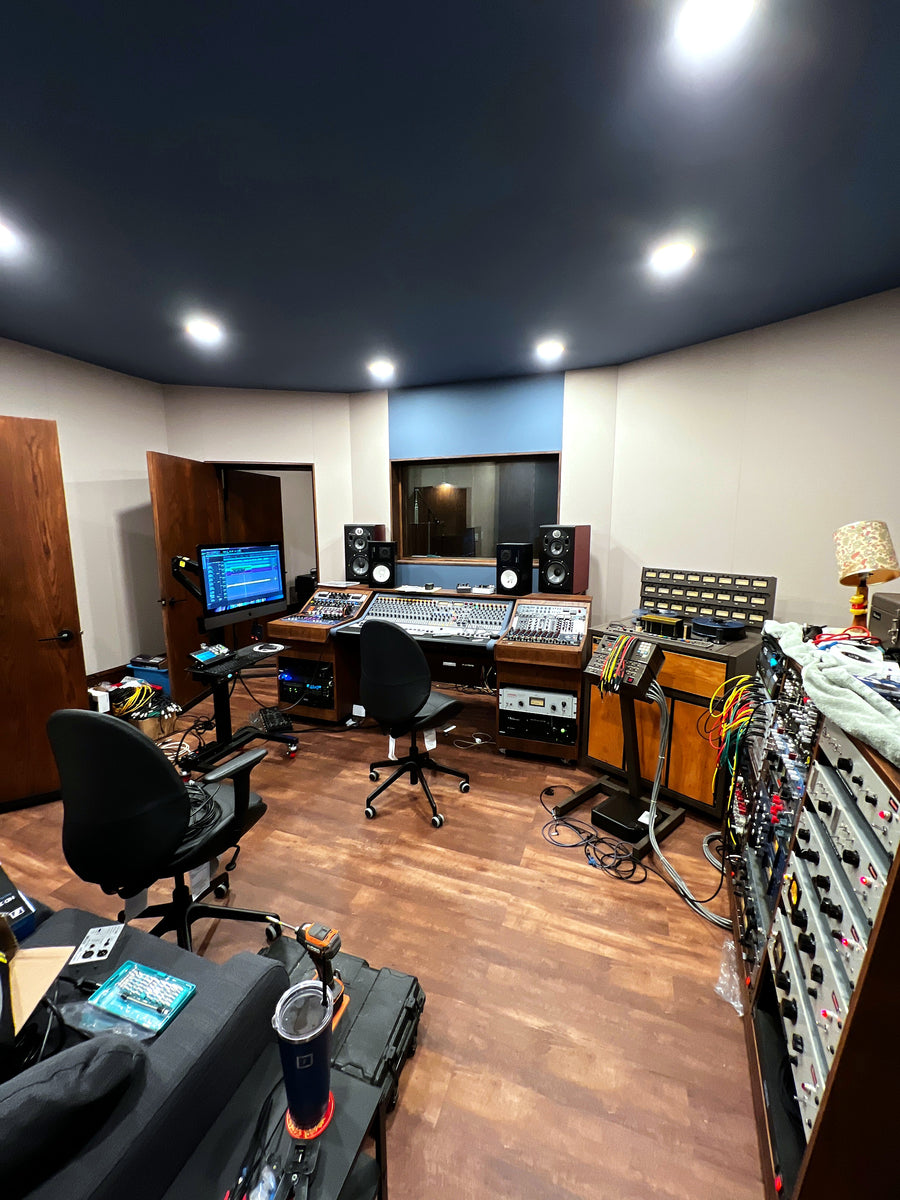
What We Wire
Custom Audio Wall Plates: Plates built for the room, placed where the mics, instruments and headphones will be used, in the live room, the booth and the control room.
Tie Lines Between Rooms: Fixed cable runs inside the walls that connect one room to another. Mic tie lines can land on a patchbay, go straight into mic preamps, or go into an interface with built in preamps, depending on the setup.
Patchbays: When a studio uses one, the tie lines, the interface and the outboard gear land on the patchbay, so routing changes happen with a patch cable.
Rack Wiring: Studio racks wired and connected to the rest of the system.
Low Voltage Runs: Audio, speaker and network cabling run in the walls and ceiling to where the gear and the speakers go.
Speaker Integration and Calibration: We mount the speakers, run their cables and connect them to the system. Once they are in, we measure the room and calibrate them. See room measurement and speaker calibration.
How We Do It
The wiring is planned with the room design. Before the walls close, we lay out where each wall plate, rack and speaker goes and what each line carries, so the boxes and cable paths go in while the framing is open. Running cable through a finished isolated wall later means cutting into it.
Once the room is finished, we wire the racks and connect the gear and the speakers. Every studio is set up differently. Some run every tie line to a patchbay, and others go straight into mic preamps or an interface. We wire it around the gear you have and how you work.
An Example Signal Path
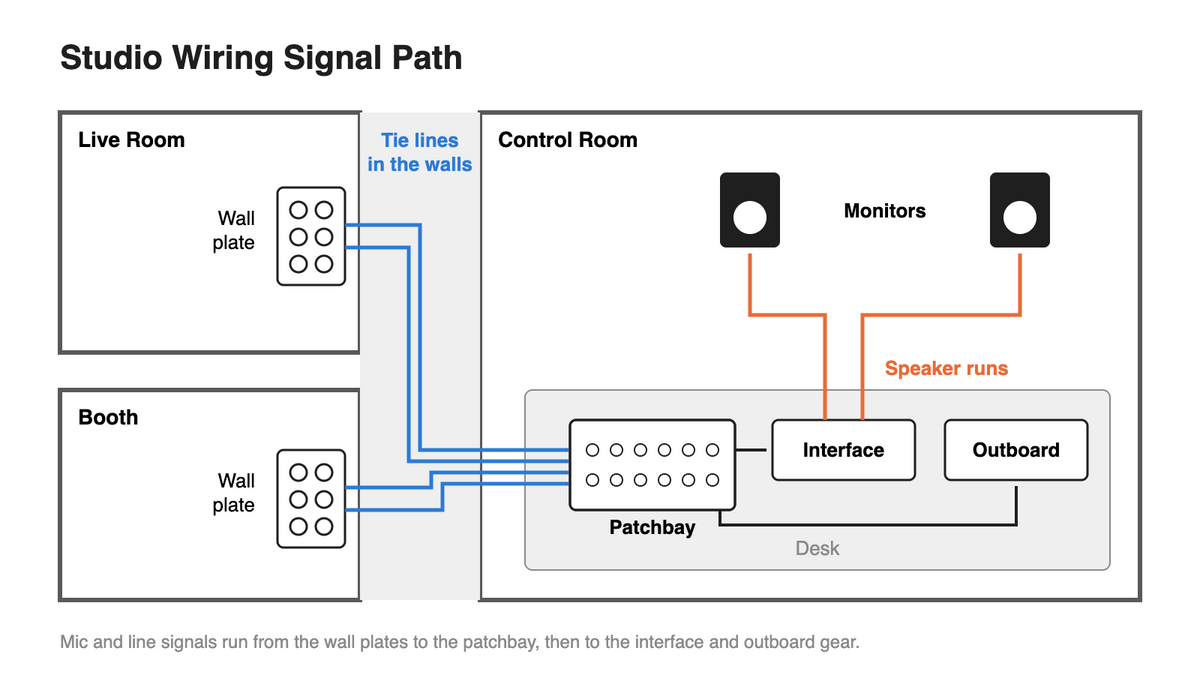
In this layout, each wall plate connects through its tie line to the patchbay, and from there any input can go to any channel of the interface or through any piece of outboard gear. The speaker runs go through the wall or ceiling, so nothing crosses the floor where people walk.
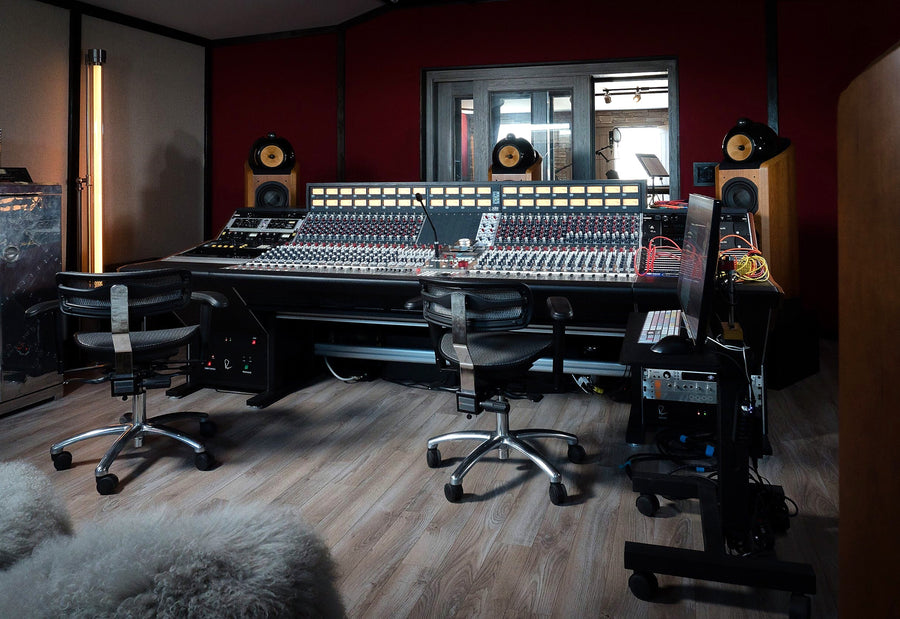
Las Vegas Warehouse Studio
On our Las Vegas warehouse studio, we designed the wall systems and the low voltage wiring, and the contractor built from our drawings. Tie lines ran from the vocal booth and from the back wall to the desk: a 4-channel audio snake and Cat6 network cable. We then installed and integrated the equipment, tuned the speakers and set up the computer system.
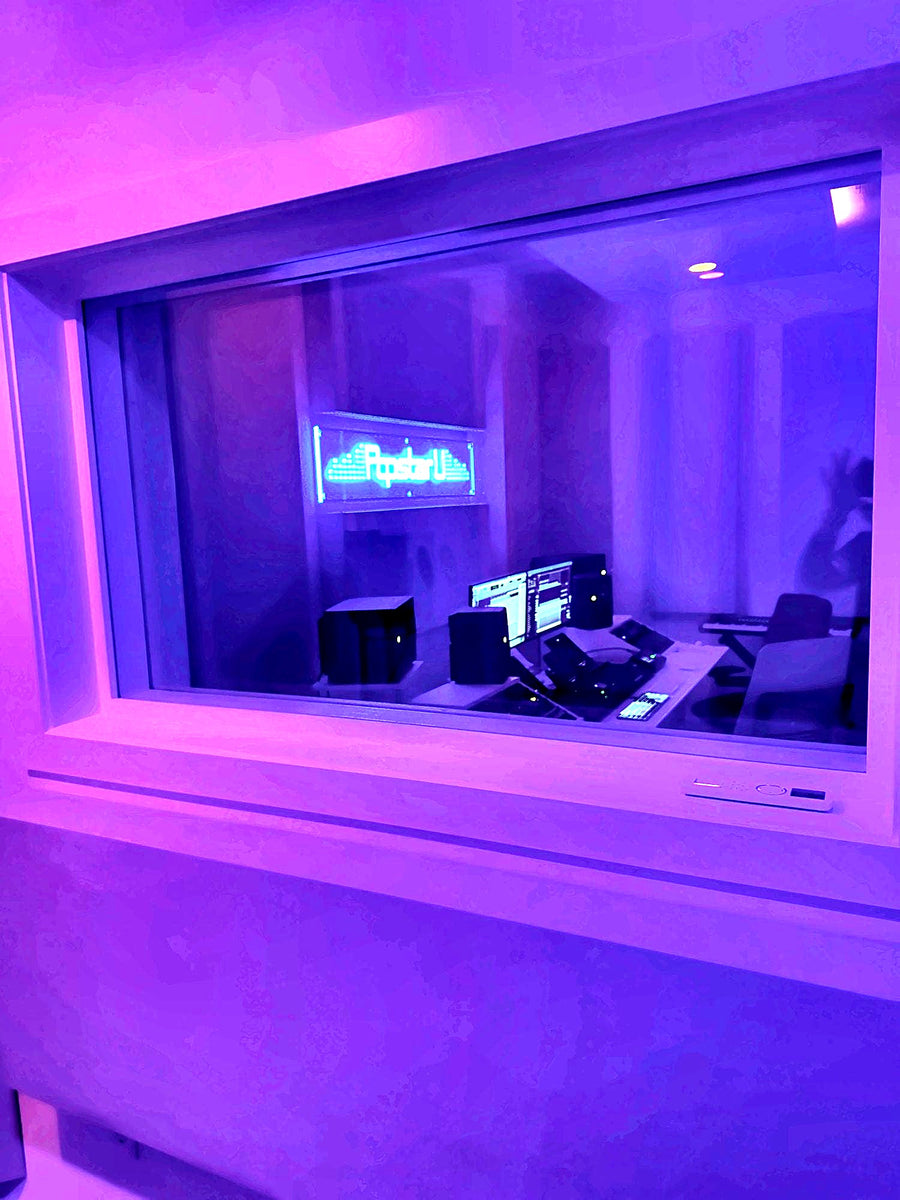
Wiring on a Full Studio Project
Wiring is usually part of a full studio project, planned with the recording studio design or a Dolby Atmos room. We also build custom studio furniture, including racks, desks and more.
- See every service we offer on our Services page, including where we work.
- See the full process, from first call to walkthrough, on How We Work.
Tell us about the rooms and the gear. Reach out to us for design assistance.
Free Room ReviewCall (818) 217-1653