
Fabric Track Systems
Fabric Track Walls and Ceilings
A fabric track wall is acoustic treatment that covers the whole surface. We design it with the room, set the absorption depth wall by wall and install it on site.
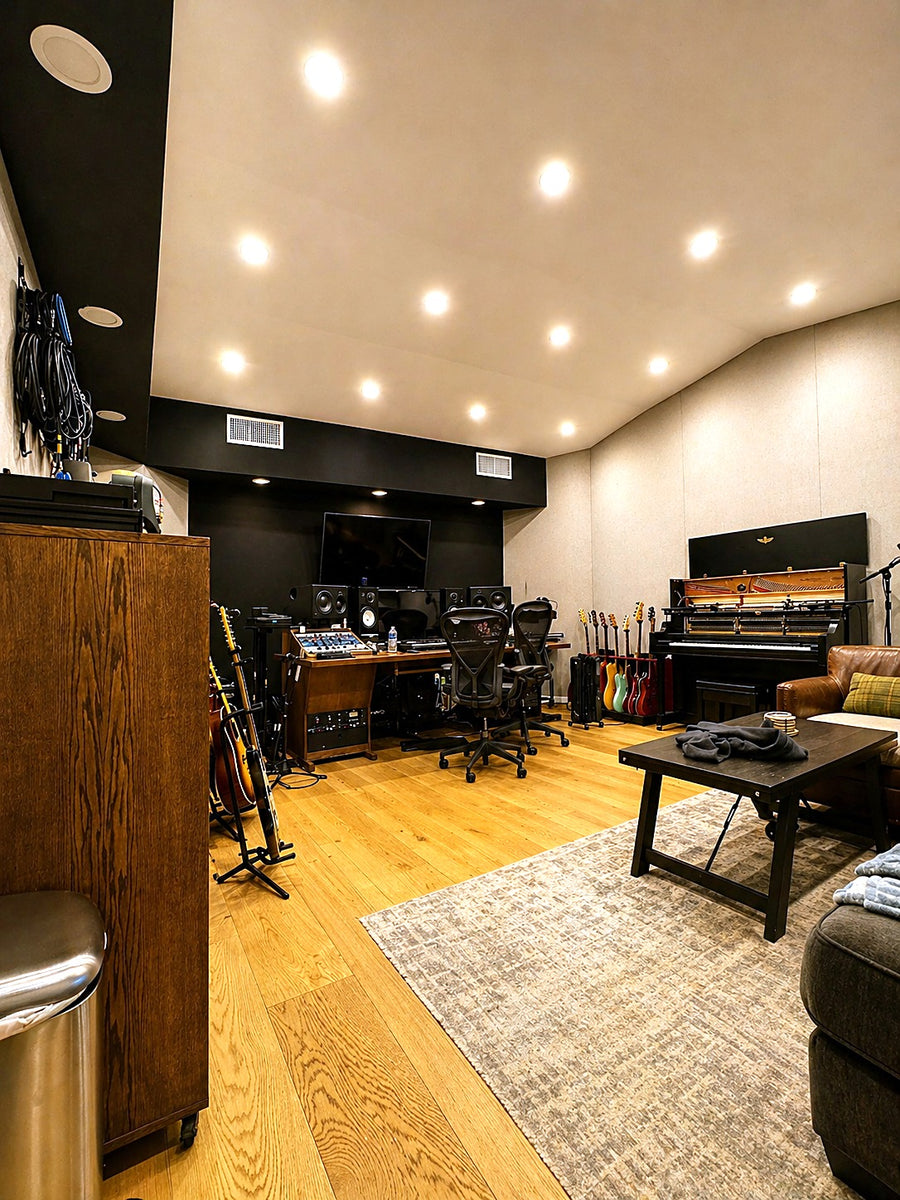
What a Fabric Track Wall Is
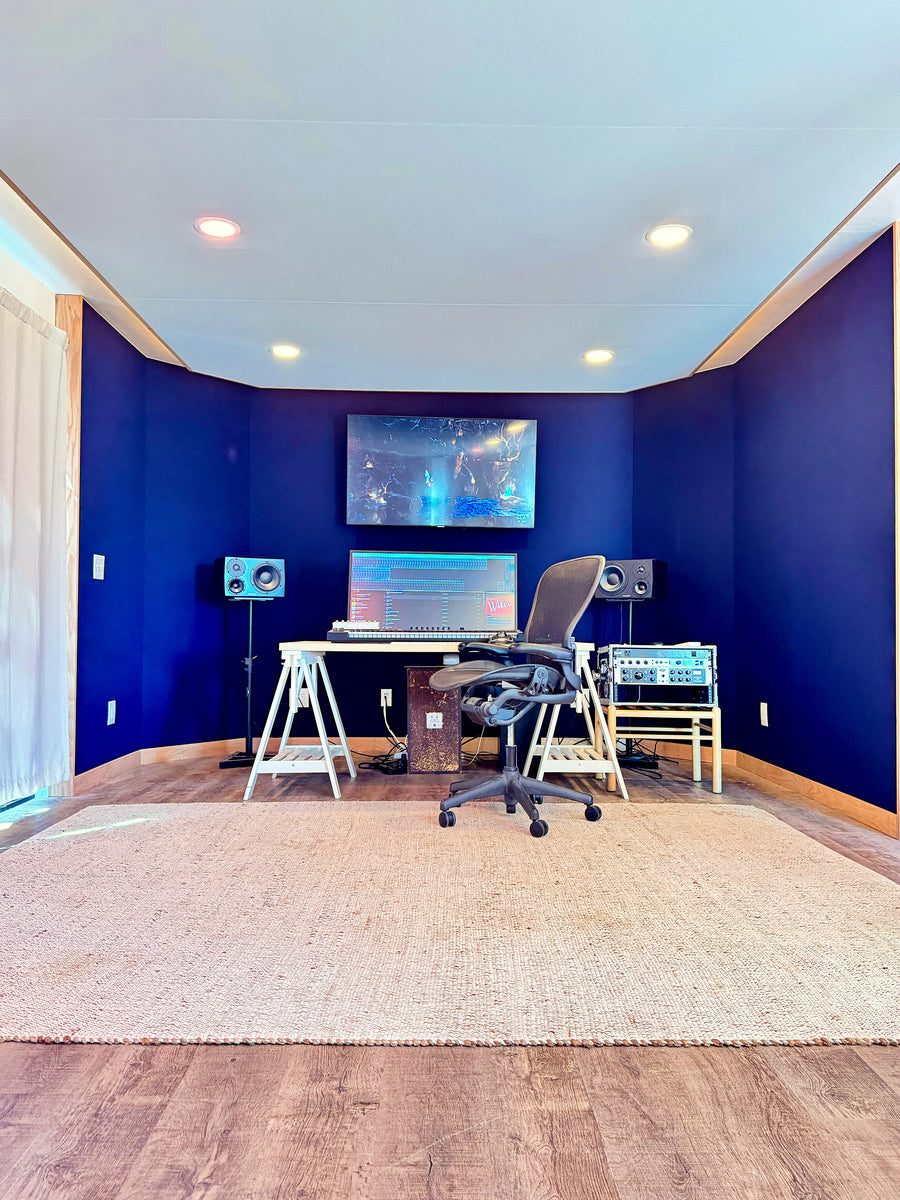
On a fabric track wall, the whole surface is the absorber. A 1-1/8" track runs around the perimeter of each surface. The space inside the track is filled with absorption, and acoustically transparent fabric is stretched over it and tucked into the track. The finished surface reads as a fabric wall from floor to ceiling and corner to corner, with no panel edges or gaps.
The same system works on ceilings, soffits and angled surfaces. For the background on how the system goes together, see our guide What Is a Fabric Track Wall?
How We Build It
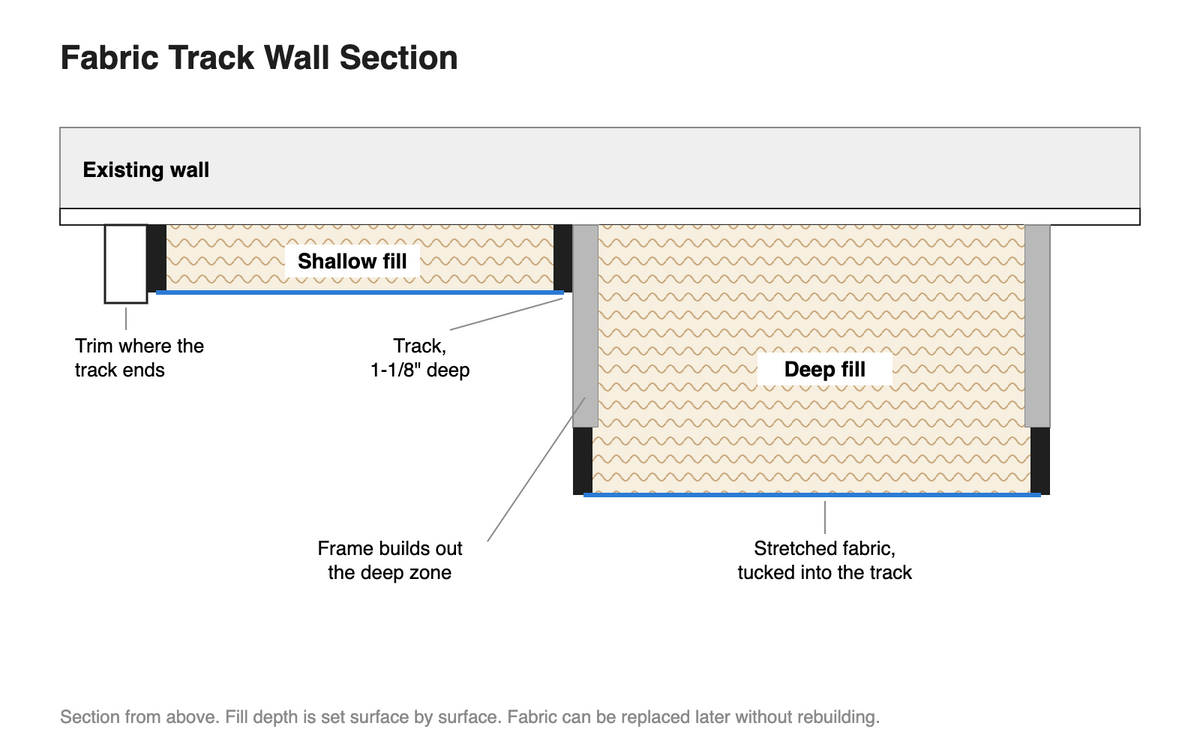
Perimeter Track: The 1-1/8" track is fastened around the edges of each surface and along any seam lines. Where the track ends on a wall, at a door, a window or the edge of the treated area, we finish it with trim.
Absorption Depth, Surface by Surface: Each wall and ceiling gets the depth the room needs. A side wall at the first reflection points can be shallower. The rear wall and the corners usually need more depth, because low frequencies need depth to absorb.
Bass Traps Behind the Fabric: Bass trap zones and perimeter soffit bass traps at the wall to ceiling corner can be built into the system, so the traps sit behind the same fabric as the rest of the wall. Pegboard zones can go behind the fabric as well.
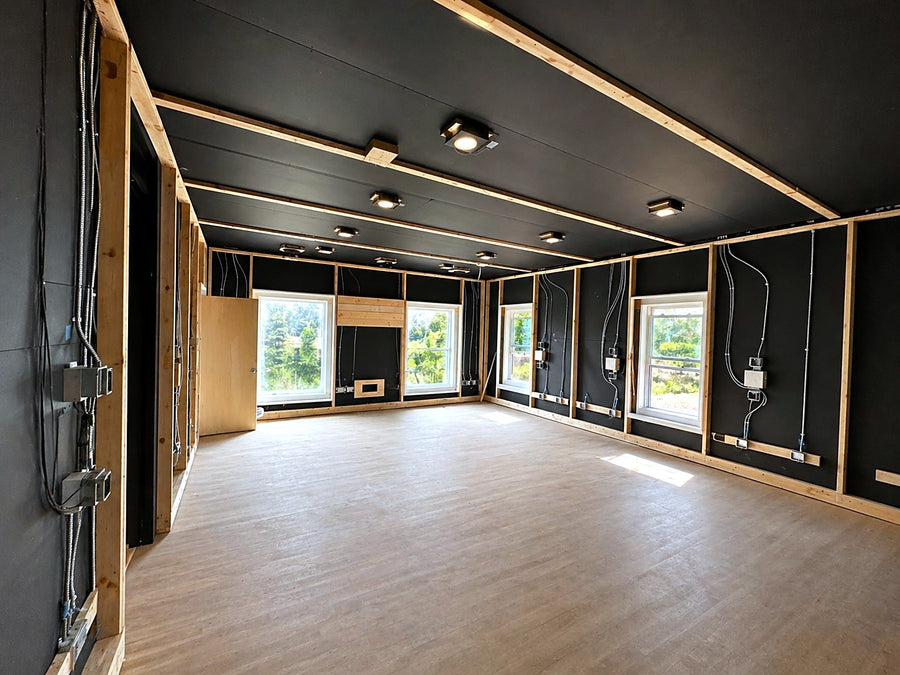
Angles and Soffits: Track follows sloped ceilings, soffits, corners and openings that a rectangular panel can't fit.
Fabric Stretched and Tucked: The fabric is pulled tight and tucked into the track. It is not glued or stapled to the wall.
The Front Wall: The wall behind the speakers doesn't have to be fabric. It can be wood paneling, or it can stay drywall, depending on the design.
Why Choose Fabric Track Over Panels
A Finished Look Wall to Wall: The room looks complete, which matters in client facing studios, theaters and living spaces where the treatment should disappear into the room.
Any Depth Behind It: Panels come in set thicknesses. Behind a fabric track wall the depth can change from one surface to the next, so a wall can be shallow in one zone and deep in another.
Fabric You Can Replace: Because the fabric is tucked into the track, it can be pulled and replaced later over the same absorption. Changing the color does not mean rebuilding the wall.
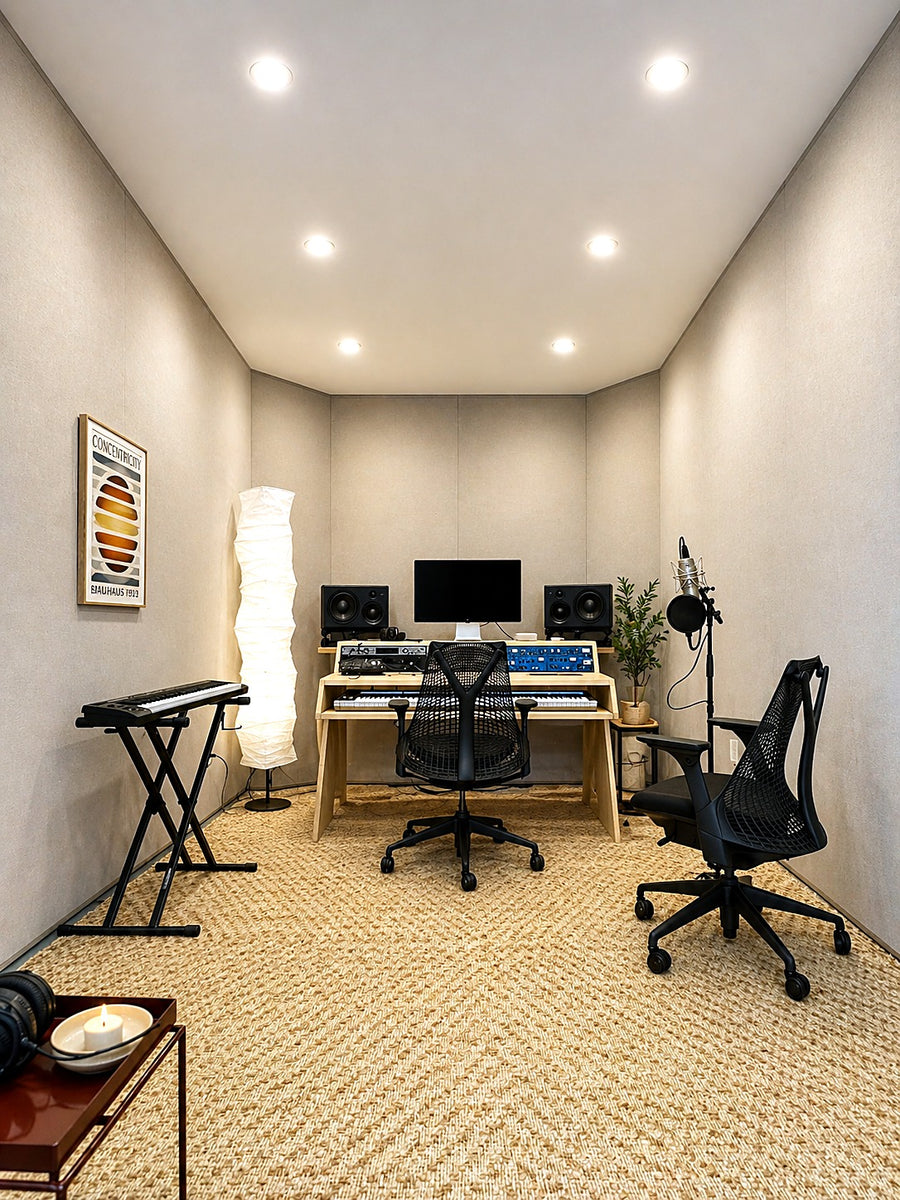
Fabric Colors
The fabric is acoustically transparent and comes in 50 colors. See all of them on our Fabric Colors page. Free swatches are available on request.
What It Costs
A full room typically runs $20,000 to $50,000. The low end is fabric over the existing wall, using whatever depth is already there. The high end is a system framed out to depth with bass traps built in, and complex finish work like custom lighting and trim takes it higher. For how fabric track compares with panels, see how much acoustic treatment costs.
Rooms for Fabric Track
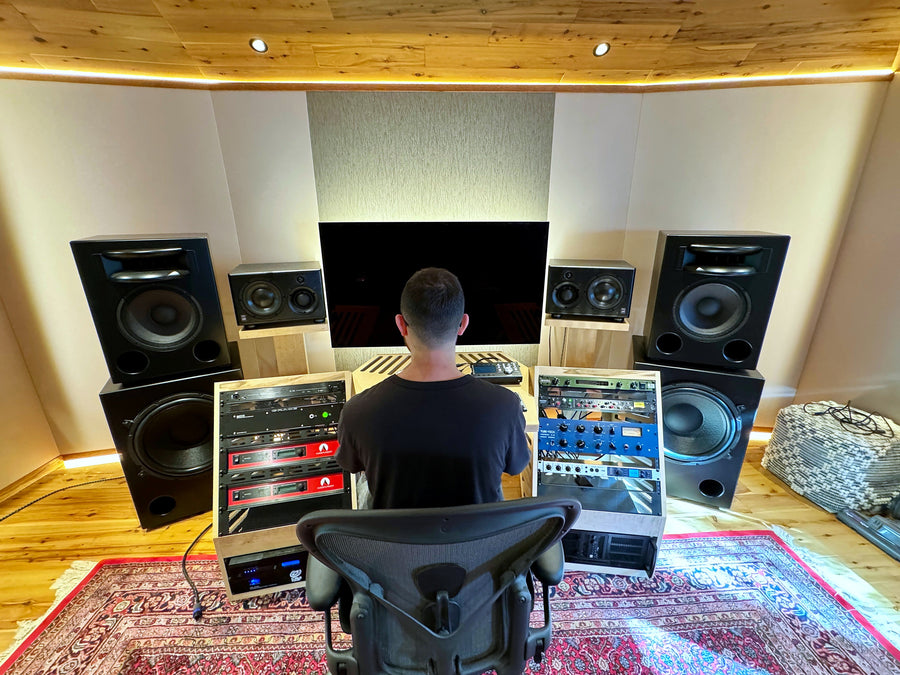
Fabric track suits recording studios, control rooms and mix rooms, home theaters and high-end rooms where the finish matters as much as the sound. It also suits rooms with sloped ceilings, soffits or odd angles. In a theater it can cover every wall and the ceiling. See Home Theater Acoustics.
How the Job Runs
Fabric track is installed on site. On a retrofit, where the room already exists, most jobs take a few weeks. One wall behind a console is a much shorter job than a full room with a sloped ceiling, bass traps and lighting built in. What we need on site is on How We Work, linked below.
- See every service we offer on our Services page, including where we work.
- See the full process, from first call to walkthrough, on How We Work.
Send us photos and dimensions of the room. Reach out to us for design assistance.
Free Room ReviewCall (818) 217-1653