
On Site Services
Room Measurement and Speaker Calibration
We measure the room at the listening position, find what is causing the problems, set the speakers and seats, tune the treatment and calibrate the speakers. Then we measure again.
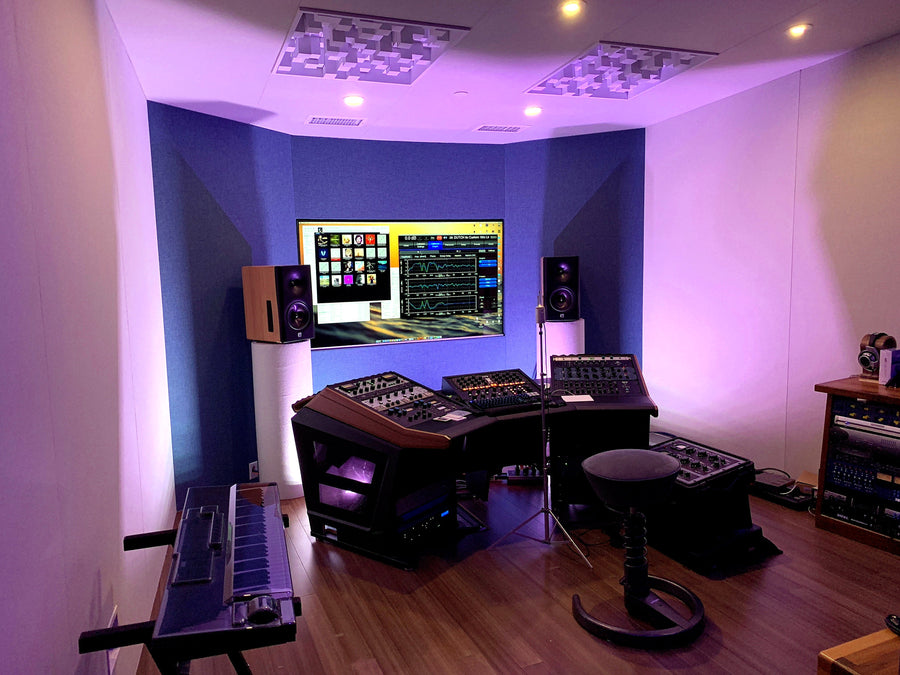
What We Measure
Frequency Response at the Listening Position: Which frequencies peak and which ones dip at the seat where you mix or watch. In the bass, a dip at one seat can be a note that has nearly gone away.
Decay Time: How long the room takes to fade after the sound stops, read band by band as T20 or T30 and reported as RT60. A room can ring much longer at one frequency than another, so a single number for the whole room hides the problem.
Seat to Seat Bass: Bass changes over short distances, so we measure more than one point. In a theater or a room with a producer's desk, we measure each seat that matters. Our post on why bass changes from seat to seat explains why.
How We Measure
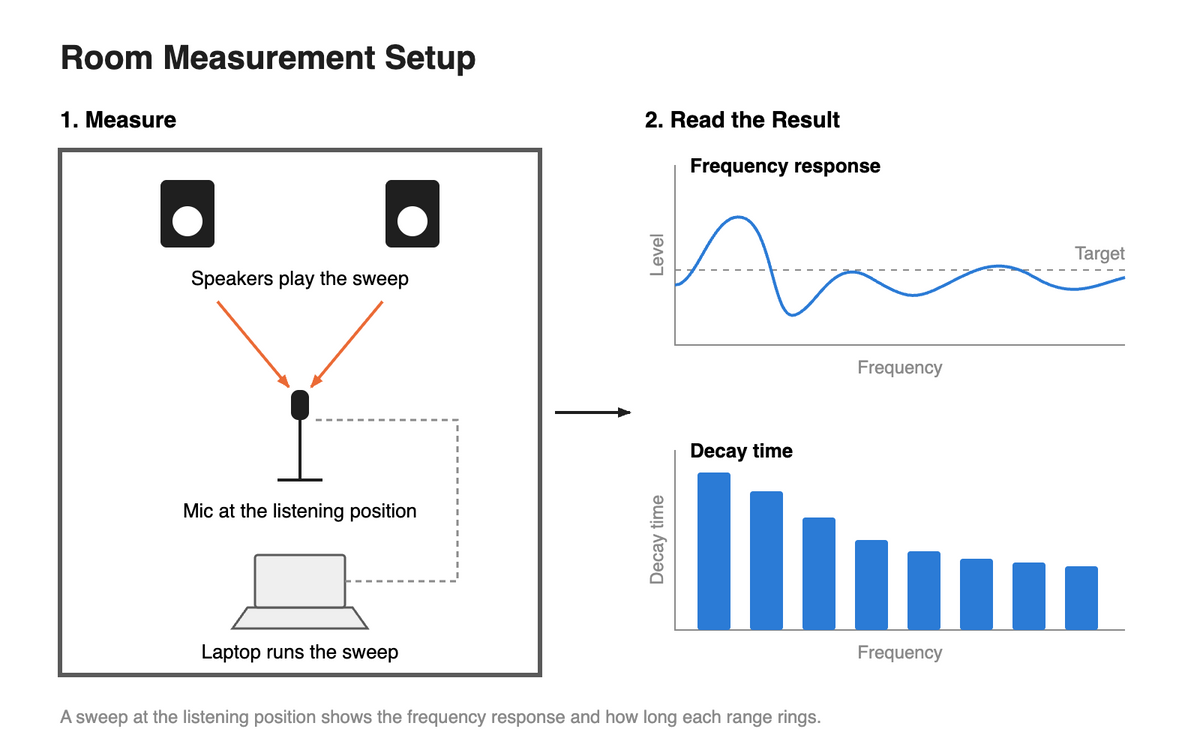
A calibrated measurement mic goes on a stand at ear height at the listening position. Room measurement software plays a sine sweep through each speaker, one at a time and then together, with the subwoofer on if the room has one. We repeat the sweep at several positions around the seat and average them, because a single point can show a dip that is gone a few inches away.
From the sweeps we read the frequency response and the decay time in each band. Comparing the left and right speakers points to placement or a reflecting surface on one side.
If you want to start on your own, our guide How to Measure Your Room covers the gear and the steps, and you can send the results through our Free Room Review.
What the Measurement Tells Us
Room Modes: Bass peaks and nulls set by the room's dimensions, and where the seat and speakers sit in that pattern.
Reflections: Comb filtering from side walls, the ceiling, the desk or a console in the path of the speakers.
Speaker and Seat Placement: Dips caused by the distance from each speaker to the wall behind it, a seat in the middle of the room, or speakers that aren't symmetrical. For how placement changes the bass, see where to put your speakers and desk.
Decay by Band: Whether the room is ringing in the bass while the mids and highs are already under control, which is common in rooms treated with thin panels only.
What Follows
The fixes go in this order.
Placement: Speakers and the listening position are moved in small steps and measured again. It costs nothing, and a few inches can move a bass dip a long way.
Treatment: Bass traps in the corners lower the peaks and raise the nulls. Absorption at the reflection points handles the mids and highs. We adjust what is in the room or add to it, based on what the measurement shows.
Speaker Calibration: Levels, delays and the subwoofer are set for the listening position. Where it is part of the scope, that includes immersive and Dolby Atmos systems, with the ceiling height speakers calibrated with the rest.
EQ Last: EQ cuts the bass peaks that remain at the main seat, fitted to an average of the measurements. It can't fill a null and it can't shorten decay time, so it comes after placement and treatment. Our post on room EQ vs acoustic treatment covers why.
Before and After a Treatment Install
Measuring the room with sweeps before treatment goes in is a service we offer, so the plan is based on what the room is actually doing. An On-Site Room Consultation covers the room's dimensions, a listening evaluation at your main position and marking the reflection points, corners and cloud positions. After the treatment goes in, we listen, fine-tune the placement and can measure the finished room to show the change in the response and the decay time. On a new room, once it is finished and the speakers are installed, we measure, tune and calibrate where it is part of the scope.
- See every service we offer on our Services page, including where we work.
- See the full process, from first call to walkthrough, on How We Work.
Send us the room and a measurement if you have one. Reach out to us for design assistance.
Free Room ReviewCall (818) 217-1653